The best vegan substitute for butter depends on the job: vegan butter sticks swap 1:1 in almost any recipe, refined coconut oil handles pastry, olive and avocado oil cover the pan, and a tub spread covers toast. Below are the 12 swaps we actually use in our kitchen, with the ratio for each and the texture change to expect.
Some are drop-in replacements, others change the result. If you just want a product to buy, jump to the end or see our vegan butter reviews.
Quick answer: every substitute at a glance
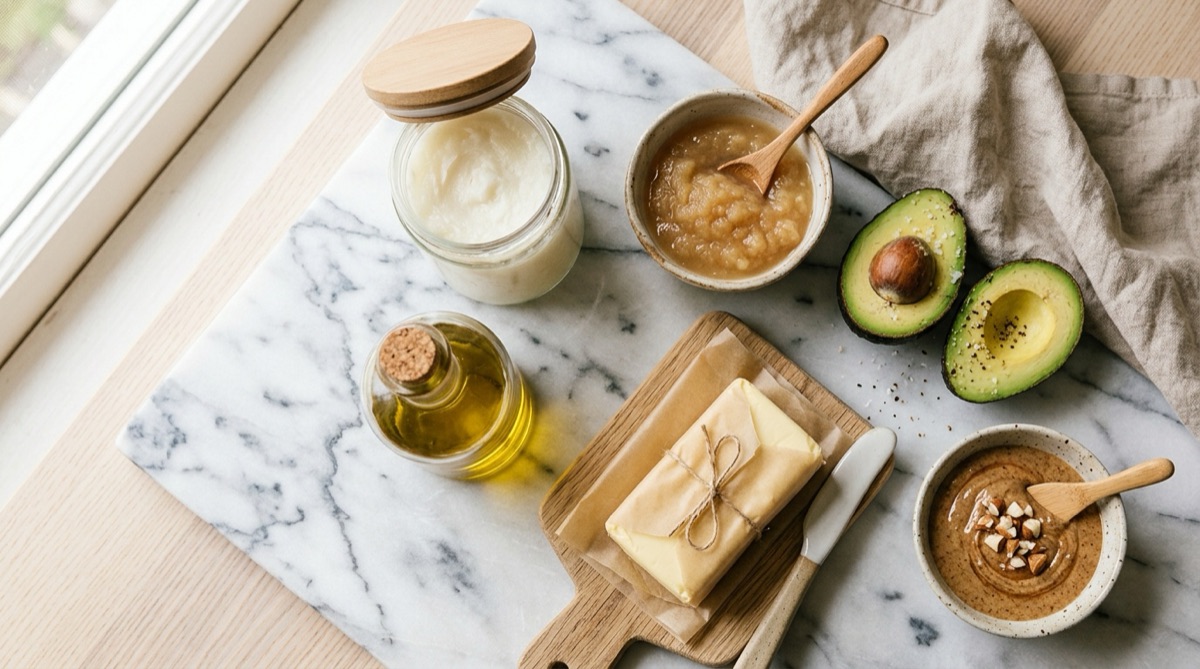
| Substitute | Best for | Ratio per 1 cup butter |
|---|---|---|
| Vegan butter sticks or blocks | Everything, especially baking | 1 cup |
| Refined coconut oil | Pie crust, cookies, shortbread | 1 cup, solid and cold |
| Vegetable shortening | Pie crust, frosting | 1 cup |
| Applesauce | Muffins, quick breads | 1/2 cup applesauce plus 1/2 cup vegan butter |
| Mashed banana | Banana bread, muffins, brownies | 1/2 cup banana plus 1/2 cup vegan butter |
| Nut butter | Cookies, brownies, blondies | 1/2 cup nut butter plus 1/2 cup vegan butter |
| Olive oil | Sauteing, savory baking | 1 cup in the pan, 3/4 cup in baking |
| Avocado oil | High heat searing, roasting | 1 cup |
| Virgin coconut oil | Curries, stir fries, popcorn | 1 cup |
| Vegan buttery spread in a tub | Toast, corn on the cob, mashed potatoes | As needed |
| Mashed avocado | Toast, sandwiches | As needed |
| Hummus | Toast, bagels, wraps | As needed |
For baking
Baking is where substitutes fail most often, because butter does three jobs at once: it adds fat, holds air when creamed with sugar, and stays solid until the oven heat hits.
Vegan butter sticks and blocks
Ratio: 1:1. This is the only substitute that creams with sugar, laminates into layers and browns like dairy butter, and sticks such as Country Crock Plant Butter, Flora Plant Butter and Earth Balance Vegan Buttery Sticks sit close to the 80% fat of dairy butter. Texture note: coconut based blocks like Miyoko's and Violife Vioblock soften faster than dairy, so give the dough an extra 20 minutes in the fridge.
Refined coconut oil
Ratio: 1:1, measured solid. Refined coconut oil is neutral in flavor and firm when cold, which makes it the best pantry swap for flaky pie crust, shortbread and scones. Texture note: it contains no water, so cookies come out slightly crisper and cakes slightly denser, and it melts close to warm room temperature, so work fast and keep the dough cold.
Vegetable shortening
Ratio: 1:1. Shortening is plant fat with zero water, and most brands are vegan, though a few blends still list animal fat, so check the label. Texture note: it makes the flakiest pie crust of anything here and holds frosting stiff at room temperature, but it adds no flavor, so for cookies we use half shortening and half vegan butter.
Applesauce
Ratio: replace half the butter with an equal amount of unsweetened applesauce and keep the other half as vegan butter or oil. It suits muffins, quick breads and snack cakes, where a moist, tight crumb is welcome. Texture note: replacing all of the butter gives a rubbery, dense result that dries out in a day, and the top browns less.
Mashed banana
Ratio: replace half the butter with mashed ripe banana. It behaves like applesauce with more sweetness and flavor, great in banana bread, oat muffins and brownies, less great in vanilla cake. Texture note: denser, moister crumb and a clear banana taste, so cut the sugar by about a quarter.
Nut butter
Ratio: replace half the butter with smooth peanut, almond or cashew butter. Nut butters bring fat and protein, so cookies and blondies hold together and get a fudgy chew. Texture note: chewier and heavier than an all-butter cookie, with an obvious nut flavor, so skip it for anything delicate or for anyone with a nut allergy.
For cooking and sauteing
In a pan, butter mostly provides fat and flavor, so oils cover it easily. Most oils also tolerate more heat than dairy butter, which burns because of its milk solids.
Olive oil
Ratio: 1:1 for sauteing. In savory baking such as focaccia or cornbread, use about 3/4 cup of oil for every cup of butter, since oil is pure fat with no water. Texture note: vegetables saute the same, but nothing browns quite like butter because there are no milk solids to caramelize.
Avocado oil
Ratio: 1:1. Avocado oil is neutral and handles the highest heat of anything on this list, so it is our pick for searing tofu, roasting potatoes and anything under the broiler. Texture note: no flavor and no browning solids, so finish the dish with a knob of vegan butter if you want a buttery taste.
Virgin coconut oil
Ratio: 1:1. Unrefined coconut oil tastes like coconut, which is a feature in curries, stir fries, fried plantains and stovetop popcorn, and it handles medium high heat comfortably. Texture note: solid in the jar, melted in seconds in the pan.
For spreading
Spreading is the easiest job to fill, because all you need is something soft, fatty and salty.
Vegan buttery spread in a tub
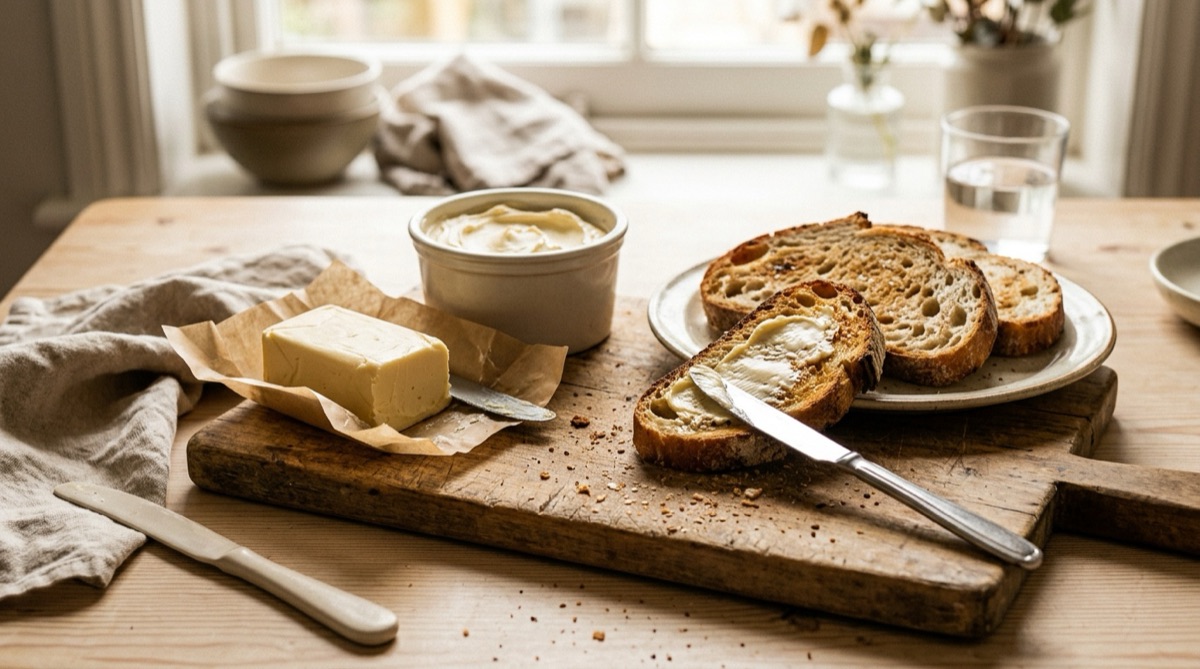
Ratio: as needed. Tub spreads contain more water than sticks, which is exactly why they glide onto cold toast, and Earth Balance Original Buttery Spread, Melt Organic and Forager Project are the three we keep in the fridge. Texture note: softer and a little less rich than dairy butter, so buy Miyoko's for a real cultured flavor on good bread, and see how each of our reviewed vegan butters spreads cold.
Mashed avocado
Ratio: as needed, about half an avocado for two slices of toast, mashed with salt, lemon and pepper. It replaces the fat and richness of butter, and non vegans never complain about it. Texture note: creamy, not greasy, and it browns within an hour, so make it fresh.
Hummus
Ratio: as needed. Hummus is chickpeas, tahini and olive oil, which makes it a savory, protein rich spread for toast, bagels, wraps and sandwiches. Texture note: thick and grainy compared to butter, and not a match for jam, so pair it with cucumber, tomato or roasted vegetables instead.
Which one should you actually buy?
For most kitchens the answer is a box of vegan butter sticks, because it is the only substitute that works everywhere without adjusting the recipe. Miyoko's Creamery Cultured Vegan Butter won our vegan butter baking test on flavor and browning, with Flora Plant Butter and Country Crock Plant Butter sticks close behind at roughly half the price.
For daily toast, Earth Balance Original is the safe pick, and our Earth Balance review explains where it beats Country Crock and where it does not.
Still wondering whether regular butter counts? Read is butter vegan. For tools that make creaming and lamination easier, see this roundup of baking tools from our sister site.
Frequently asked questions
What is the best vegan substitute for butter in baking?
Vegan butter sticks or blocks, used 1:1, because they cream with sugar, hold air and brown like dairy butter. Miyoko's Creamery, Flora Plant Butter and Country Crock Plant Butter sticks all performed well in our baking test.
Can I use oil instead of butter in baking?
Yes, with a reduced amount: about 3/4 cup of olive, avocado or neutral oil for each cup of butter, since oil is pure fat and butter contains water. It will not work in recipes that cream butter with sugar or rely on cold butter for flakiness.
Can I replace butter with applesauce?
Partially. Replace up to half the butter with an equal amount of unsweetened applesauce in muffins, quick breads and snack cakes, and keep the remaining half as vegan butter or oil. Replacing all of the butter gives a dense, rubbery crumb that dries out quickly.
Is coconut oil a good substitute for butter?
Yes for pastry and cookies, less so for cakes. Use refined coconut oil 1:1, measured solid and kept cold, for pie crust, shortbread and scones. It has no water, so results are slightly crisper and denser, and it melts close to warm room temperature, so chill the dough well.
What is the healthiest substitute for butter?
It depends what you are trying to change. Olive and avocado oil are lower in saturated fat than butter or coconut oil, while applesauce and mashed banana cut the fat in baked goods but add sugar. Mashed avocado and hummus add fiber to toast.
Bottom line
Keep vegan butter sticks in the fridge and you have a 1:1 swap for every recipe you own. Add refined coconut oil for pastry, olive or avocado oil for the pan, and a tub spread for toast, and you will not miss dairy butter anywhere in the kitchen. When you are ready to pick a brand, start with our vegan butter category, where every product has been tested for spreading, baking and cooking.