Margarine is not automatically vegan: many US brands add whey, casein, lactose, milk fat or vitamin D3 from lanolin, so you have to read the label every time. "Vegan butter" is, in practice, a margarine that was formulated without any of those ingredients and built to taste and bake more like butter, usually with more fat, firmer sticks and sometimes live cultures. Here is how the two differ and which products on US shelves are safe.
What margarine is, in short
Margarine was invented in France in the late 1860s as a cheap butter substitute for the army and the working class. The original recipe was made from beef tallow and skim milk, so it has not always been plant-based. Vegetable oil versions took over in the early 1900s once hydrogenation made it possible to turn liquid oil into a solid.
Modern margarine is an emulsion of plant oils and water, held together with lecithin or mono- and diglycerides. Trans fats from partial hydrogenation were phased out in the US, so most brands now rely on palm oil or interesterified fats to stay solid. That base formula is vegan; the extras added on top are where the problems start.
Why margarine is not automatically vegan
Manufacturers add dairy for flavor and mouthfeel, because a plain oil blend tastes flat. The additions are small and easy to miss. These are the ones to look for.
- Whey: the watery part of milk, added for a creamy, dairy-like taste. The most common offender in stick margarines.
- Casein or sodium caseinate: milk protein, used to improve texture and browning.
- Lactose: milk sugar, sometimes listed on its own and sometimes hidden inside "milk solids."
- Milk fat or buttermilk: found in "butter blend" spreads that mix margarine with a little real butter.
- Vitamin D3: usually extracted from lanolin, the grease in sheep's wool. Plant-based D3 from lichen exists but is rare in margarine. Vitamin D2 is always plant or fungus derived.
- Natural flavors: a catch-all term that can include dairy-derived butter flavor. If the label does not say "plant-based natural flavor" or carry a vegan certification, treat it as unknown.
- Mono- and diglycerides: emulsifiers that can be plant or animal derived. In the US they are almost always plant-based, but the label rarely says.
How to read a margarine label
You can check any tub or stick in under a minute. Go in this order.
- Look for a vegan certification mark first. If the package says "Certified Vegan" or carries the Vegan Society sunflower, you are done.
- Read the allergen statement. US labels must call out milk. "Contains: Milk" ends the discussion; "May contain milk" is a cross-contamination note and is fine for most vegans.
- Scan the ingredients for whey, casein, lactose, buttermilk, milk fat or cream. These are the deal breakers.
- Check the vitamin line. "Vitamin D3" without a plant source is almost certainly lanolin. "Vitamin D2" is safe.
- Treat "natural flavor" as a question mark unless the brand states it is dairy-free elsewhere on the package or on its website.
One more tip: formulas change, and the same brand often makes both a vegan stick and a non-vegan tub. Check the specific product, not the brand name.
What makes vegan butter different from margarine
Legally, "butter" in the US is a dairy term, which is why plant brands sell "buttery spread," "plant butter" or "buttery sticks." Chemically, vegan butter and margarine are the same kind of product: an oil and water emulsion. The differences are in the details, and they matter in the kitchen.
It is a marketing term, but a useful one
"Vegan butter" tells you two things a plain margarine label does not: that the product contains no dairy or animal-derived additives, and that it was designed to replace butter one-to-one rather than to be a cheap spread.
Fat content
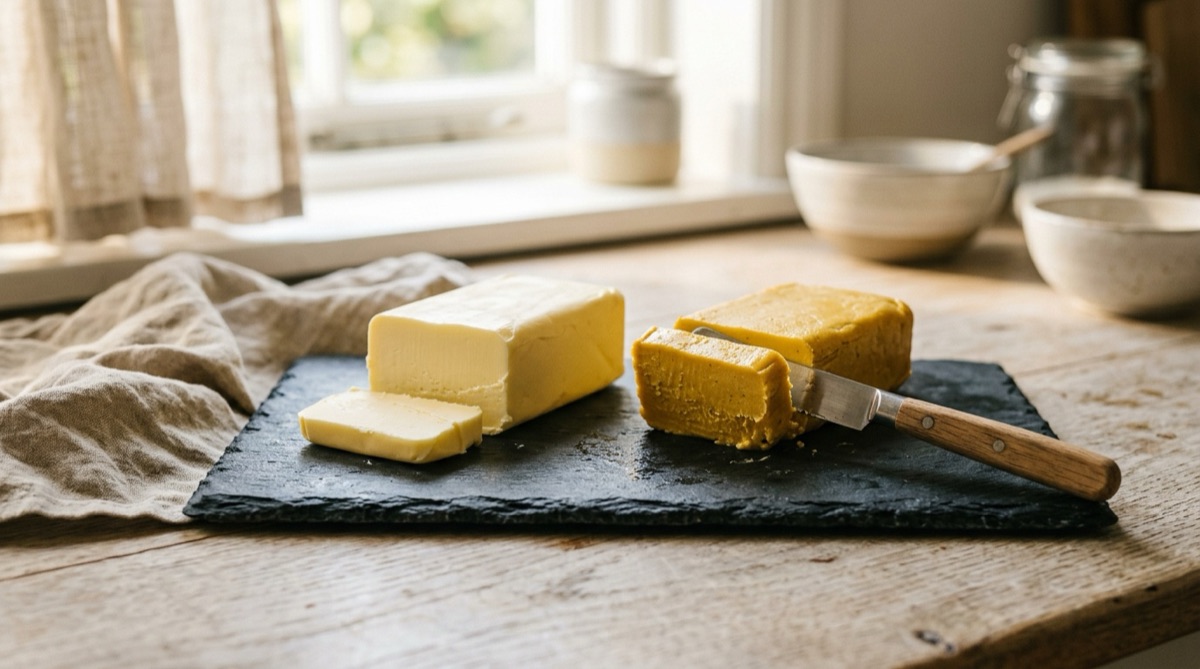
Dairy butter is roughly 80% fat. Tub margarines and "light" spreads can be well under 60%, with the rest being water and air, which is why they are useless for cookies and pastry. Vegan butter sticks and blocks are usually formulated closer to butter's fat level, which is what lets them cream with sugar and hold structure when baked.
Cultured versions
The most butter-like products, such as Miyoko's Creamery Cultured Vegan Butter, are made from cashew or coconut cream fermented with live cultures. That fermentation produces the lactic tang and aroma of European butter. No conventional margarine goes to that trouble.
Blocks and sticks vs tubs
Margarine has always been a tub product first. Vegan butter brands lean into sticks and blocks, such as Earth Balance Vegan Buttery Sticks, Country Crock Plant Butter sticks, Flora Plant Butter and Violife Vioblock, because those formats work for baking. Our vegan butter baking test shows how much that matters.
Dairy butter vs margarine vs vegan butter
| Product | Source | Fat content | Vegan? | Best use |
|---|---|---|---|---|
| Dairy butter | Cow's milk cream | About 80% | Never | Baking, browning, finishing |
| Margarine (tub) | Plant oils, water, emulsifiers, often dairy additives | Often under 60% | Sometimes; check the label | Spreading only |
| Margarine (stick) | Plant oils, water, emulsifiers, often whey or D3 | Closer to 80% | Sometimes; check the label | Spreading, basic baking |
| Vegan butter (tub) | Plant oils, water, salt, lecithin | Varies, often under 60% | Always | Spreading, sauteing |
| Vegan butter (stick or block) | Plant oils or cultured nut cream | Close to 80% | Always | Baking, cooking, table butter |
Which US margarines and spreads are vegan
Formulas change and varieties within a brand differ, so treat this list as a starting point and confirm on the package.
Vegan
- Earth Balance (all buttery spreads and the Vegan Buttery Sticks): certified vegan. Our full Earth Balance review covers the whole lineup.
- Country Crock Plant Butter (olive oil, avocado oil and almond oil versions, sticks and tubs): vegan. Note that this is the Plant Butter line specifically, not every Country Crock tub.
- Miyoko's Creamery Cultured Vegan Butter, Violife Vioblock, Flora Plant Butter, Melt Organic, Forager Project Buttery Spread, Kite Hill European Style Butter: all vegan by design.
Check the label
- Classic Country Crock spreads (the non-Plant-Butter tubs): some varieties are dairy-free, others are not, and the vitamin source varies. Check each tub.
- I Can't Believe It's Not Butter, Smart Balance, Blue Bonnet, Imperial, Parkay, Fleischmann's: each of these has had varieties with whey, buttermilk or lanolin-derived vitamin D3. Read the specific package.
- Store brand margarine: most contain whey or animal-derived vitamin D3. Assume not vegan until the label proves otherwise.
- Anything labeled "butter blend" or "with real butter": not vegan.
Our recommendations
If you want the cheapest safe option, buy Country Crock Plant Butter sticks or Earth Balance. For flavor, spend the extra on Miyoko's or Kite Hill European Style. If you avoid palm oil, go for Violife Vioblock, Melt Organic or Forager Project.
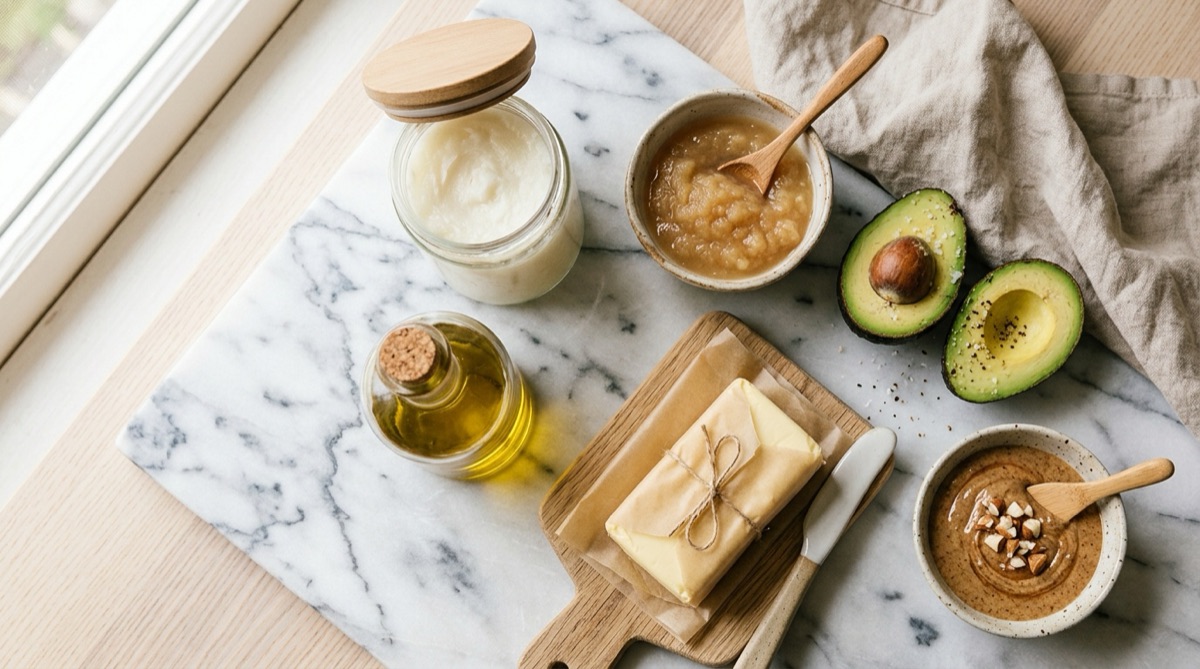
All of these are rated and compared in our vegan butter guide, with notes on spreading, sauteing and baking. And if you would rather skip packaged spreads altogether, our vegan butter substitutes post covers coconut oil, olive oil and other pantry swaps.
Frequently asked questions
Is margarine vegan?
Not always. Margarine is made from plant oils, but many US brands add whey, casein, lactose, milk fat or vitamin D3 from lanolin, none of which are vegan. Certified vegan margarines such as Earth Balance and Country Crock Plant Butter exist, but for any other brand you need to read the ingredient list and the allergen statement.
What is the difference between vegan butter and margarine?
Both are emulsions of plant oil and water, so chemically they are the same type of product. Vegan butter is a marketing term for margarine that is guaranteed free of dairy and animal-derived additives, and it is usually formulated with a higher fat content, sold in sticks or blocks, and sometimes cultured so it tastes and bakes more like dairy butter.
Is Country Crock vegan?
The Country Crock Plant Butter line (olive oil, avocado oil and almond oil versions) is vegan. The classic Country Crock tubs vary by variety and some contain dairy-derived ingredients or animal-sourced vitamin D3, so check the specific package before buying.
Is vitamin D3 in margarine vegan?
Usually not, because most vitamin D3 is extracted from lanolin, which comes from sheep's wool. Vegan D3 made from lichen exists but is uncommon in margarine, so unless the label specifies a plant source, assume D3 is animal-derived. Vitamin D2 is always vegan.
Can you bake with margarine instead of vegan butter?
You can bake with a stick margarine if it is vegan and has a fat content near 80%, but tub margarines contain too much water and produce flat, greasy results. For reliable baking, use vegan butter sticks or blocks, which are formulated to match dairy butter's fat level.
Bottom line
Margarine and vegan butter are cousins, not twins. Margarine is only vegan when the label proves it, because whey, casein and lanolin-derived vitamin D3 show up constantly in US brands. Vegan butter removes that guesswork and, in stick or block form, bakes far better than a tub spread. Earth Balance and Country Crock Plant Butter are the safe budget picks, and our vegan butter guide ranks them against the premium options.